

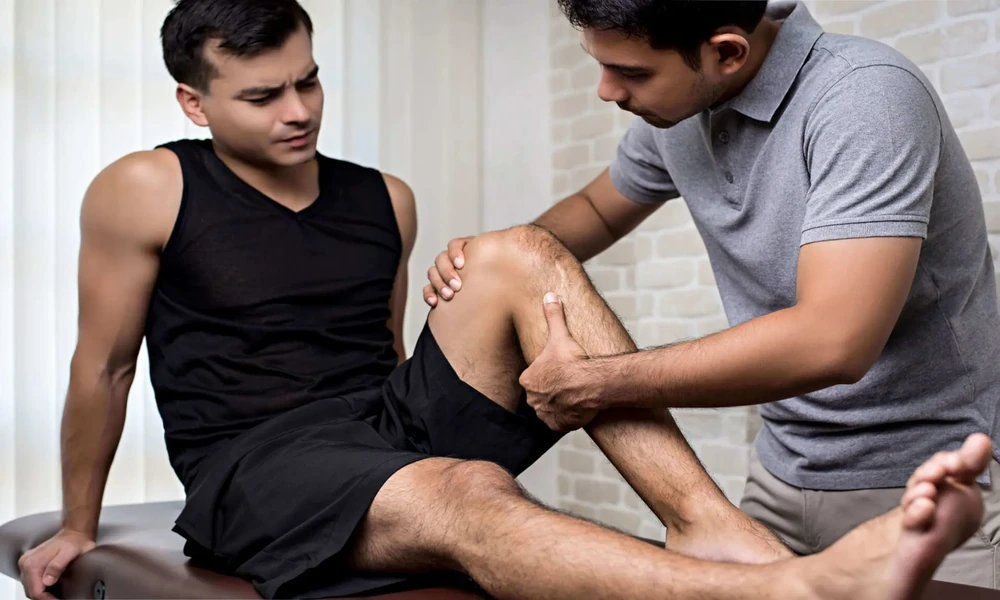
Returning an athlete to competition involves much more than waiting for pain to disappear or restoring basic movement. Competitive sports expose the body to rapid changes in speed, repeated force, physical contact, fatigue, and unpredictable movements. An athlete who feels comfortable during ordinary exercises may still be unprepared for these demands. Sports physical therapists use progressive loading to gradually rebuild the physical capacity required for training and competition while observing how the body responds at every stage.
Establishing the Athlete’s Current Capacity
Before increasing physical demands, a sports physical therapist needs to understand what the athlete can currently tolerate. Strength, mobility, balance, coordination, movement quality, and response to exercise can all provide useful information.
The therapist may also consider the athlete’s sport, position, previous training volume, and competition schedule. A goalkeeper, distance runner, basketball player, and tennis player experience very different types of physical stress. Establishing this starting point allows rehabilitation to reflect the athlete’s actual sporting requirements rather than relying on a standard exercise sequence.
Increasing Resistance With a Purpose
Progressive loading often begins with controlled resistance exercises designed to restore the capacity of muscles and surrounding tissues. Instead of simply adding more weight every session, therapists can adjust several variables, including repetitions, resistance, range of motion, movement speed, and recovery time.
These changes allow the body to experience gradually increasing demands without suddenly jumping from rehabilitation exercises to intense athletic activity. Progress may depend on how well the athlete tolerates each stage rather than following an identical timetable for everyone.
Introducing Speed and Explosive Force
Competitive movement rarely happens at a slow, controlled pace. Athletes may need to sprint, jump, accelerate, land, rotate, or produce force within fractions of a second. For this reason, rehabilitation eventually needs to move beyond traditional strengthening.
A therapist may progressively introduce faster movements, jumping exercises, controlled landing tasks, or explosive drills when appropriate. The objective is to develop the ability to produce and absorb force efficiently. This stage can reveal limitations that are not obvious during slower exercises, particularly when an athlete needs to control the body quickly.
Preparing for Repeated Effort
Performing a movement successfully once does not necessarily mean an athlete is ready for competition. During games, movements are repeated while fatigue steadily increases. A player may sprint dozens of times, repeatedly change direction, or perform technical movements late in a match when physical control becomes more difficult.
Load progression can therefore include increasing exercise duration, repetitions, running volume, or work intervals. Therapists can observe whether movement quality changes as fatigue develops. This helps determine whether the athlete can maintain adequate physical control beyond the opening minutes of activity.
Moving Toward Sport-Specific Demands
As physical capacity improves, exercises can become increasingly similar to the athlete’s actual sport. A soccer player might progress from straight line running to acceleration, deceleration, cutting, and reactive drills. A basketball player may advance toward repeated jumping, lateral movement, and landing under more demanding conditions.
Coordination between the rehabilitation team and a sports physician may also help guide decisions when medical evaluation, injury status, or return to competition considerations need to be incorporated into the athlete’s overall plan.
Adding Unpredictability to Rehabilitation
Gym exercises are usually predictable, but competition rarely is. Athletes constantly react to opponents, teammates, balls, changing speeds, and unexpected movements. Late-stage rehabilitation can therefore introduce reactive tasks that require athletes to make quick decisions instead of knowing every movement in advance.
For example, an athlete may need to change direction following a visual signal or react to another player’s movement. These tasks combine physical loading with perception and decision-making, creating a closer representation of competitive conditions.
Building the Final Bridge to Competition
Progressive loading creates a structured transition between rehabilitation and full sporting demands. Rather than treating return to competition as a single moment, sports physical therapists gradually expose athletes to greater resistance, speed, repetition, fatigue, and sport-specific challenges.
The ultimate objective is not simply to complete exercises without discomfort. It is to develop the strength, control, endurance, and movement capacity needed to handle the intensity of competition. By progressively narrowing the gap between rehabilitation and real sporting demands, athletes can approach their return with a clearer understanding of what their bodies are prepared to manage.
