

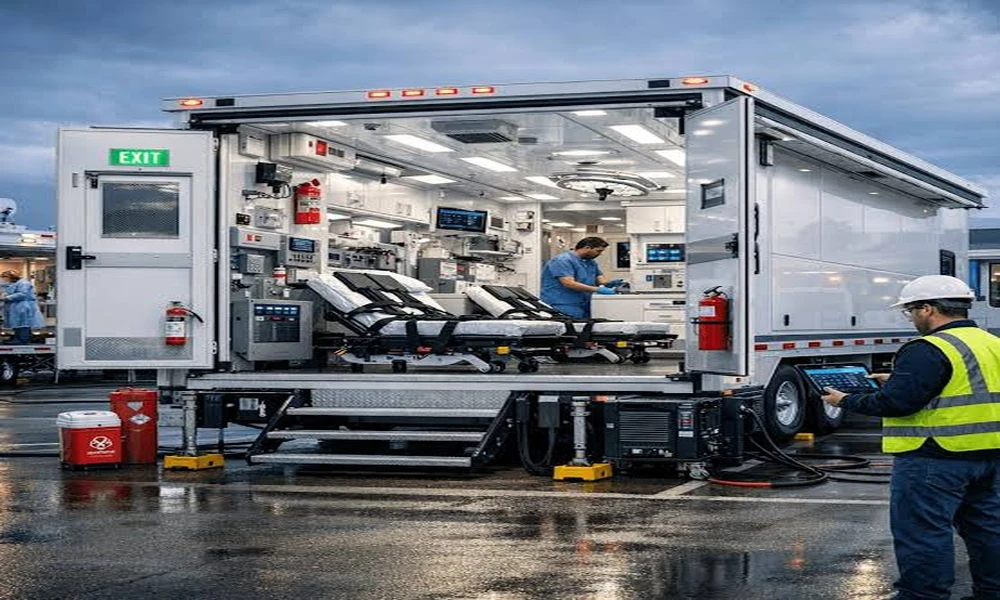
Healthcare providers have long faced a difficult challenge: how do you deliver quality medical care to patients who live hours away from the nearest hospital or specialty clinic? Across rural America and underserved urban neighborhoods, millions of people struggle with limited access to physicians, diagnostic testing, preventative screenings, and specialty care. One solution that has proven increasingly effective is the use of mobile medical trailers.
Mobile medical trailers function as fully equipped healthcare facilities on wheels. Depending on their configuration, these units may provide primary care, mammography, MRI, CT imaging, dental services, ophthalmology, dialysis, laboratory testing, blood donation, vaccination clinics, or even surgical procedures. By bringing healthcare directly to the patient, organizations can improve access, reduce travel burdens, and encourage earlier diagnosis of medical conditions.
For healthcare systems, government agencies, nonprofit organizations, and private providers, mobile medical trailers have become an important investment, not only financially, but also socially.
One often overlooked aspect of owning these specialized units is understanding their market value throughout their lifecycle. Whether a trailer is being financed, insured, donated, sold, or included in a business transaction, obtaining an independent Medical Equipment Appraisal helps organizations understand the value of both the medical equipment and the specialized vehicle that houses it.
Why Mobile Medical Units Continue to Grow
The demand for mobile healthcare has accelerated for several reasons.
Rural communities often lack specialty physicians and advanced diagnostic equipment. Instead of requiring patients to drive several hours for care, hospitals can schedule recurring visits using mobile clinics.
Large employers increasingly use mobile medical trailers for employee wellness screenings and occupational health programs.
Public health departments deploy mobile units for vaccination campaigns, community health fairs, and disaster response.
Healthcare providers also recognize that preventative care is significantly less expensive than emergency treatment. By bringing services directly into communities, providers improve patient outcomes while reducing long-term healthcare costs.
Today’s mobile clinics often feature digital X-ray systems, ultrasound equipment, laboratory analyzers, telemedicine platforms, electronic medical records, pharmacy dispensing systems, and advanced climate-controlled environments designed to meet healthcare regulations.
Case Study: Bringing Breast Cancer Screening to Rural Communities
Consider a regional healthcare network serving several rural counties where the nearest permanent imaging center is more than 75 miles away.
The health system invests in a custom-built mobile mammography trailer equipped with:
- Digital 3D mammography system
- Patient changing suites
- Registration area
- PACS connectivity
- Climate-controlled imaging room
- Backup electrical systems
- ADA accessibility features
Rather than requiring patients to travel long distances, the trailer visits multiple communities each month according to a published schedule.
Within the first year of operation, screening participation increases substantially because patients no longer need to take an entire day off work or travel significant distances for preventive care. Several early-stage cancers are detected that otherwise may have gone unnoticed until symptoms developed.
The healthcare provider also benefits operationally. The trailer serves multiple communities using a single piece of advanced imaging equipment, maximizing utilization while reducing the need to construct permanent satellite facilities.
Several years later, the organization refinances its equipment portfolio and requires an independent valuation of the mobile medical trailer and its installed imaging equipment. Because these assets combine highly specialized vehicles with sophisticated medical technology, determining market value requires expertise in both medical equipment and the secondary equipment marketplace.
An independent appraisal provides lenders and administrators with an objective opinion of value that supports financing decisions and long-term asset management.
More Than Just a Trailer
Mobile medical trailers represent far more than transportation.
They are sophisticated healthcare facilities designed to meet many of the same operational standards as permanent clinics. Depending on their mission, they may include:
- Digital imaging systems
- Examination rooms
- Surgical lighting
- Medical gas systems
- Sterilization equipment
- Laboratory instruments
- Pharmacy storage
- Information technology infrastructure
- Backup generators
- Specialized HVAC systems
- ADA-compliant patient access
Each component contributes to the overall value of the mobile clinic and requires consideration when determining fair market value.
Supporting Better Healthcare Decisions
As healthcare organizations continue expanding community outreach programs, mobile medical trailers will play an increasingly important role in improving access to care.
These units allow providers to reach patients where they live, reduce barriers to treatment, improve preventative care, and deliver specialized services that would otherwise be unavailable.
Like any significant capital asset, mobile medical trailers should be periodically evaluated to support financing, insurance coverage, accounting requirements, charitable donations, mergers and acquisitions, and equipment replacement planning. Understanding their value helps organizations make informed financial decisions while ensuring these critical healthcare assets continue serving communities for years to come.
As demand for mobile healthcare continues to grow, these innovative clinics on wheels will remain one of the most effective ways to bridge the healthcare gap between major medical centers and the communities that need them most.
