

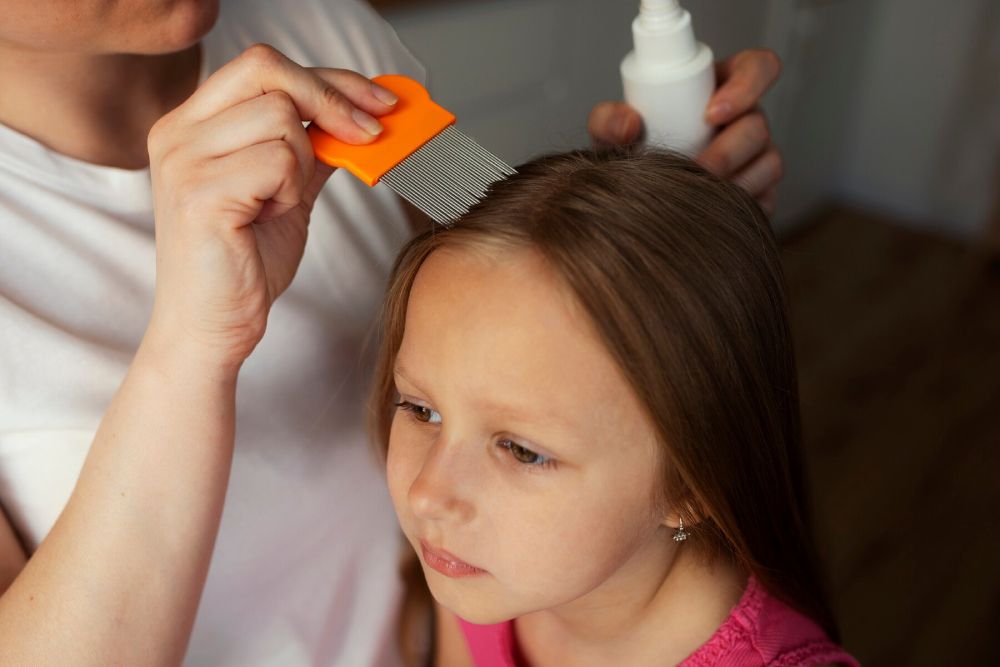
Head lice (Pediculus humanus capitis) infestations are a common issue among school-aged children in the UK. These parasitic insects, which feed on human blood, can spread quickly in close-contact environments such as schools and nurseries. While head lice do not carry disease, they can cause significant itching, discomfort, and sometimes secondary infections due to excessive scratching. As a primary care professional, understanding how to diagnose, treat, and provide effective advice to parents is essential in managing this common issue.
Clinical Presentation
Head lice infestations often present with intense scalp itching, particularly around the nape of the neck and behind the ears. This itching is caused by an allergic reaction to the saliva of the lice. While the itching may take several weeks to develop after the initial infestation, some children may not experience it at all. Visible signs include live lice moving on the scalp and nits (lice eggs) attached to the hair shafts close to the scalp. Nits are oval and can be confused with dandruff, but unlike dandruff, they are firmly attached to the hair and difficult to remove.
In cases of severe infestation, children may develop secondary bacterial infections from scratching, such as impetigo, which presents with crusted or weeping sores on the scalp.
Treatment and Management
First-line treatments include topical insecticides like permethrin 1% lotion or malathion 0.5% lotion. Both treatments require a second application after 7 to 10 days to ensure that newly hatched lice are eradicated. However, due to increasing resistance to these agents, non-pesticidal treatments such as dimeticone and isopropyl myristate, which work by physically suffocating the lice, are gaining favour.
Manual removal using a fine-toothed comb (wet combing) is another effective method, particularly for young children or those with treatment-resistant lice. Wet combing should be done every 3–4 days for at least two weeks.
Encourage parents to check all household members and treat those who show signs of lice, as asymptomatic carriers are common. Bedding, clothing, and hairbrushes should be washed in hot water, or sealed in plastic bags for 72 hours to kill any remaining lice.
Advice for Parents
Parents play a critical role in preventing and managing head lice outbreaks. Here’s some key advice you can share:
Regular Checks: Encourage parents to regularly inspect their children’s hair, especially during school outbreaks. Early detection can help prevent the spread of lice.
Avoid Stigma: Reassure parents that head lice infestations are not linked to poor hygiene. Head lice can affect anyone, regardless of cleanliness or socioeconomic status.
Wet Combing: Advise parents to use the wet-combing method as a non-chemical option. Wet the child’s hair, apply conditioner, and comb through with a fine-toothed comb to remove lice and nits. This should be done diligently every few days over two weeks.
No Need for School Absence: Inform parents that children with head lice do not need to be excluded from school, as lice do not spread easily from one child to another in the school setting.
Household Hygiene: Lice cannot survive off the human scalp for more than 24-48 hours, so thorough washing of clothes, pillowcases, and other personal items used by the child should suffice.
For more information on managing common skin infestations, consider reading our guide, Common Skin Infestations in Children: A Clinical Overview for UK Primary Care Professionals.
Conclusion
Head lice infestations are a frequent concern for parents and children alike. With effective treatment options available and proper advice, primary care professionals can help reduce the impact of head lice outbreaks in schools and homes. By supporting parents with clear, practical advice and dispelling common myths, healthcare providers can ensure more efficient management and lower transmission rates within the community.
References:
Burgess IF, Maunder JW. Treatment of head lice in children. BMJ Paediatrics Open. 2022; 6(1)
Mumcuoglu KY, Klaus S. Head lice: Diagnosis, biology and treatment. Pediatrics in Review. 2023; 45(2):135-140.
